Key takeaways
- Ring diameter does not tell you brightness. Compare lux at the same distance, color range, CRI or TLCI, diffusion, and power source.
- A stable stand and safe cable route matter more than extra effect modes.
- Place the light slightly above eye level and close enough to run below full output; distance changes softness and exposure.
- One ring creates a recognizable front catchlight and flat fill. A diffused panel placed off-axis gives more shape.
- Manufacturer output figures are not a shared laboratory test, so use them as setup clues rather than a guaranteed ranking.
Four current ring-light kits
| Pick | Official output | Color range | Stand | Price |
|---|---|---|---|---|
| NEEWER RH12B folding stand | 1,810 lux at 0.5m | 2900–7000K | Wide plate, 60-inch height, folding arm | $89.99 |
| NEEWER RL-18 new version | 5,500 lux at 0.5m | 3200K or 5600K filters | Tripod, 61-inch height | $114.99 |
| Lume Cube Cordless Ring Light Pro | 1,700 lux at 0.5m; 1,500 lumens | 2700–7500K | Tripod, 18–70 inches | $299.99 |
| Lume Cube Ring Light 18 | 900 lux at 0.5m; 528 lumens | 3200–5600K | Tripod, up to 70 inches | $159.99 |
These are each manufacturer’s figures, not measurements made in one room with one meter. Prices exclude tax and temporary codes. NEEWER warns that prices can vary by location and logistics. Confirm stock, the exact stand variant, and return terms before ordering.
1. NEEWER RH12B with folding stand: best for a small room
The RH12B kit pairs a 12-inch, 24-watt bi-color ring with a 15-by-10-inch metal floor plate and a folding 29-inch arm. The stand reaches 60 inches. NEEWER rates the light at 1,810 lux from 0.5 meter, CRI 97+, TLCI 98+, 2900K to 7000K, and zero-to-100-percent dimming. The box includes a phone holder, Bluetooth shutter, USB-C cable, adapter, ball head, and stand.
The plate base is the reason to choose this version. Tripod legs take a wider footprint and can sit directly between creator and camera. A flat base can slide beside a desk or under some furniture, though the listed 15-inch width still needs clear floor. The folding arm can move the light above or forward without putting its pole in the center of every frame.
The 12-inch source is smaller than the common 18-inch ring. At the same framing and distance, a larger diffused source can create softer transitions. The RH12B’s size is a worthwhile trade when the actual room cannot safely hold an 18-inch head and wide tripod. NEEWER includes 12 effect modes, but ordinary portrait and product work should begin in steady CCT mode.
Choose it for: a bedroom, home office, seated stream, tabletop work, or narrow walking path. Skip it for: wide full-body framing or a location kit that must fold into one small shoulder bag.
2. NEEWER RL-18 new version: best output for the money
NEEWER lists the 18-inch, 55-watt RL-18 at $114.99 and rates it at 5,500 lux from 0.5 meter with a CRI of 95. The 61-inch tripod stand, phone holder, ball-head cold-shoe adapter, Bluetooth shutter, power adapter, four white filters, four orange filters, and ring-light carry bag are included.
Its large head and much higher manufacturer output figure make it a better fit for standing or three-quarter framing than a small desktop light. Extra output also allows the fixture to sit farther back or run below maximum, depending on the desired exposure. The tradeoff is coarse color control: the listed 3200K and 5600K options come from orange and white filters, rather than a continuous color-temperature dial.
The tripod should be opened with its center joint close to the floor, as the product instructions describe. Extending a light stand and keeping its legs narrow increases tipping force and creates a hazard. Add a suitable stand weight if the manufacturer permits it, keep the phone centered, and never mount a heavy camera without checking the head, adapter, and stand limits.
Choose it for: brighter, wider portrait or live-stream framing at a moderate price. Skip it for: precise color matching, a cramped path, or frequent battery-powered work.
3. Lume Cube Cordless Ring Light Pro: best for locations
Lume Cube’s $299.99 Pro uses a 17.5-inch edge-lit head with built-in diffusion. The company lists 1,500 lumens, 1,700 lux at 0.5 meter, CRI 96+, 2700K to 7500K adjustment, and a stand that extends from 18 to 70 inches. The kit also carries a phone mount, camera mount option, remote, power cable, and travel case.
The built-in battery is the distinguishing feature. Lume Cube states up to 70 minutes at full brightness and up to 120 minutes at lower output on the main product page. It can also run while plugged in. That makes it useful for a rental room, backstage corner, or changing set where power cables would slow the setup.
Battery convenience should not be confused with unlimited runtime. Charge before leaving, pack the adapter, and avoid promising a full-day cordless shoot. The $300 price also approaches two-light panel kits, which can give a creator more control over face, background, and product highlights.
Choose it for: frequent moves, cordless takes, wide color adjustment, and a complete travel case. Skip it for: a permanent outlet-side studio or a budget that could benefit more from two lights.
4. Lume Cube Ring Light 18: a simple AC-powered kit
The standard Lume Cube 18-inch kit costs $159.99. Its published specifications are 528 lumens, 900 lux at 0.5 meter, CRI 96+, and 3200K-to-5600K adjustment. The head tilts 180 degrees, the tripod reaches 70 inches, and the kit includes a phone mount, power cord, and travel case.
This version is less bright on the company’s own figures than the NEEWER RL-18 and does not include built-in battery power. It can accept two Sony NP-750 batteries, but those are sold separately. The reason to consider it is a tidy, documented kit with continuous color adjustment and a tall stand, not raw value.
Choose it for: a straightforward 18-inch AC setup with a case and wide stand adjustment. Skip it for: maximum light per dollar or cordless work without buying batteries.
How to place a ring light without flattening every shot
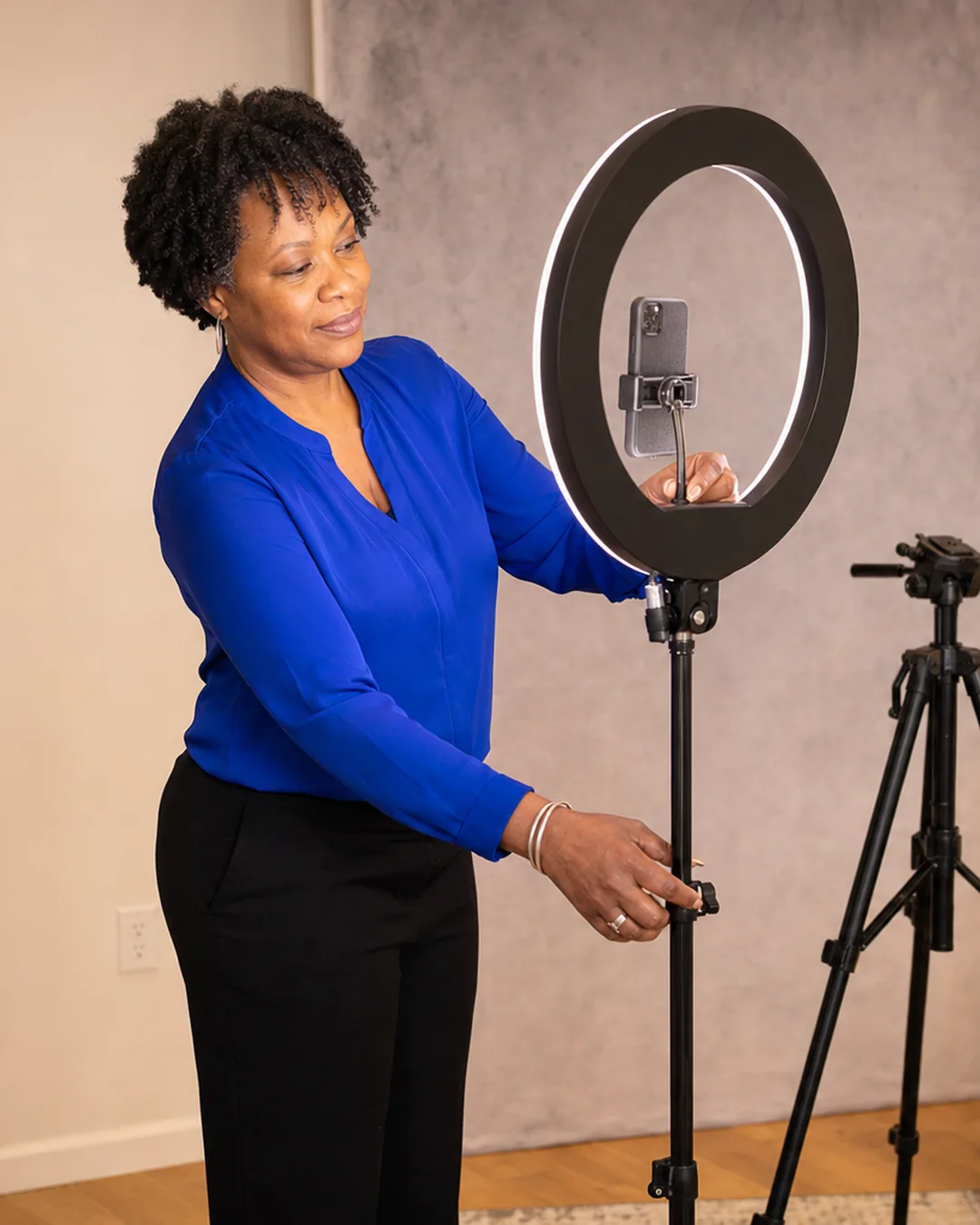
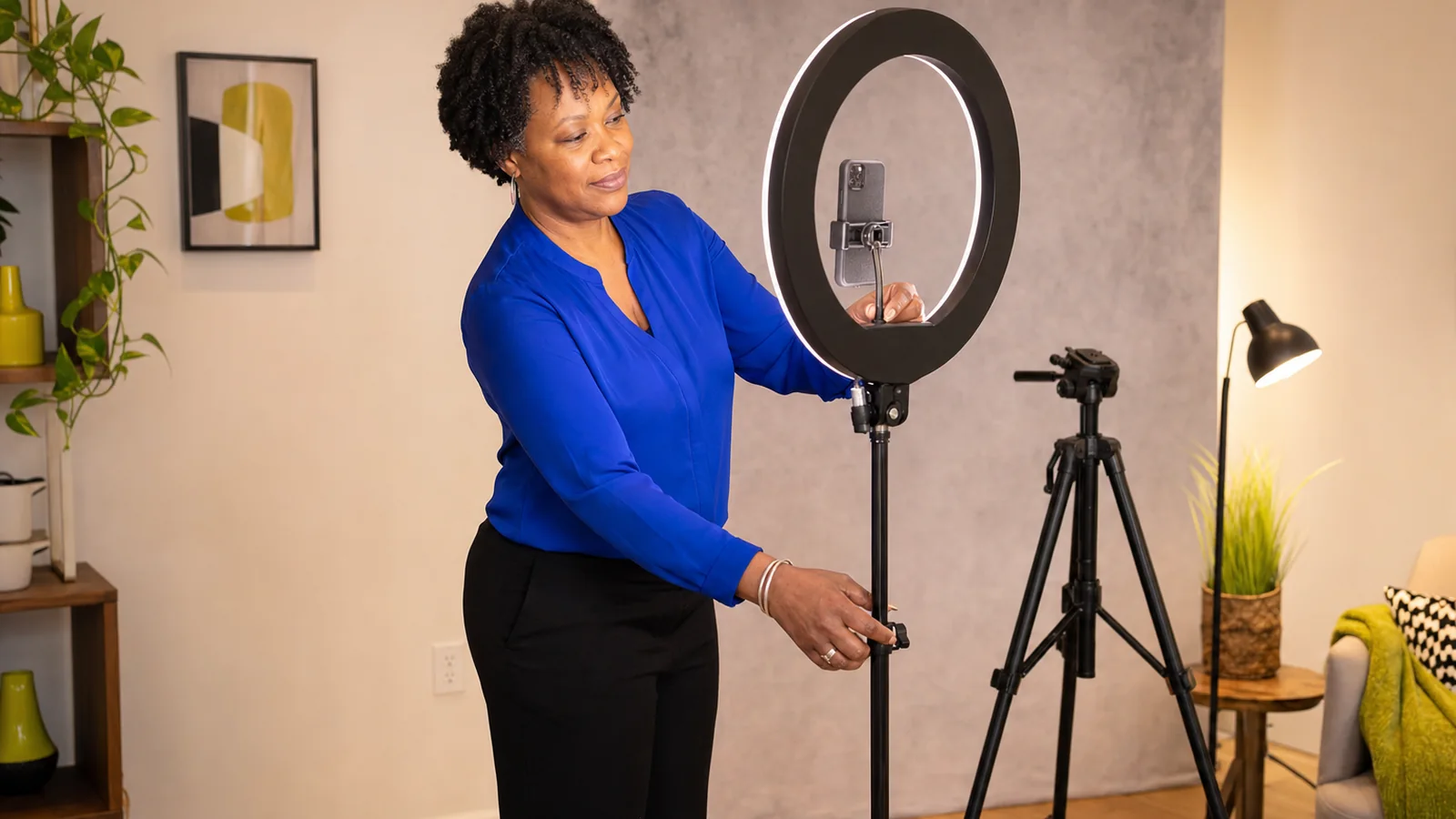
Start with the center of the ring just above eye level and the camera close to its center. Move the light close enough to run at a comfortable output, then expose the face with the camera’s manual or locked controls. If the result looks too flat, move the ring 20 to 30 degrees to one side and keep the camera on axis. The shadow direction will add some shape while the circular source remains close.
Glasses can reflect the ring. Raise the light, angle it down, lower or tilt the glasses slightly when safe, and change camera height by a small amount. A larger move is often more effective than editing the reflection later. Contact-lens users and anyone prone to eye discomfort should lower output, increase diffusion, take breaks, and avoid staring at an intense source.
For product photos, a ring can create bright circular reflections on glossy packaging, screens, and polished surfaces. Move it off-axis or switch to a diffused panel. For full-body work, place a larger source farther away and check that exposure remains even from face to feet.
Stand and cable safety
- Open tripod legs fully and keep the center joint low.
- Put one leg under the direction of an extended head or arm where the stand design allows.
- Use only a sandbag or counterweight suited to the stand and keep it low.
- Route power along the stand, then tape or cover the floor crossing with material intended for cables.
- Do not hang a bag from a raised stand; swinging weight can make it less stable.
- Check phone clamp tension without a case that defeats its grip.
- For a camera, confirm every adapter’s load and use a separate tripod if uncertain.
- Lower the stand before moving it and unplug by the connector, not the cable.
What the product page should tell you
Lux and distance
Lux describes illumination on a surface; the distance is essential because light falls quickly as it moves away. A number at 0.5 meter cannot be compared directly with one at 1 meter. Lumens describe total emitted light and also do not tell you exactly what reaches the face. Look for both the figure and the test distance.
Color and fidelity
A wide Kelvin range helps match a warm lamp or cool daylight, but matching the number is only a start. CRI and TLCI estimate color rendering under test conditions. Values in the mid-90s are reassuring on paper; actual cameras, skin tones, mixed room light, and white balance still affect the file. Turn off competing bulbs or match them as closely as possible.
Power and controls
Physical dials remain usable when an app fails. A remote helps a solo creator already in position. Wi-Fi and effects are optional. Confirm whether a kit uses AC, USB-C power delivery, removable batteries, or a built-in pack—and whether its charger is in the box.
The actual stand variant
Listings often reuse a light head across several kits. Match the model number and box contents, not only the product photo. Check maximum and minimum height, packed length, base width, tilt hardware, phone holder, camera mount, bag, and warranty. A “with stand” listing may still omit a ball head or power adapter.
When a panel light is better
A ring light is fast for one person facing the camera. A rectangular diffused panel is easier to place at a 45-degree angle and creates a more directional portrait. Two smaller panels can separate face and background. A COB fixture with a softbox offers a larger source but takes more floor space, power, and setup time. Choose by framing and room, not by the shape that appears most often in creator photos.
Camera exposure and autofocus also affect the result. Our best vlogging cameras for solo creators article compares current bodies, screens, audio inputs, heat limits, and stabilization without claiming a studio test.
Frequently asked questions
Is a 12-inch or 18-inch ring light better?
A 12-inch ring is easier to fit close for a seated head-and-shoulders frame. An 18-inch ring can cover a wider frame and appear softer at a similar subject distance. Output, diffusion, and placement matter as much as diameter.
How bright should a ring light be?
Bright enough to reach the desired camera exposure without forcing an uncomfortable full-output setting. Start low and move the source closer. Lock exposure and white balance so the camera does not undo each adjustment.
Can a phone sit inside the ring?
Most kits include a phone clamp, but confirm its width, orientation, and load. Center mounting gives a symmetrical catchlight. Off-center mounting can reduce glare and add facial shape. Always test the clamp over a soft surface before raising it.
Do I need RGB effects?
Not for accurate face or product light. Bi-color white adjustment is more useful for routine work. If a colored background is part of the set, a separate small RGB fixture keeps color away from skin and gives independent control.
The verdict
The NEEWER RH12B folding-stand kit is the most practical first buy for a tight home studio. The RL-18 offers more manufacturer-rated output and a larger source for little more money, provided the tripod fits. Pay for the Lume Cube Pro only when cordless operation and travel are recurring needs. Whichever kit wins, leave room for the stand, secure the cable, and test placement before deciding you need more brightness.
How we selected these lights
Zivity compared current manufacturer listings, prices, measured-output claims, color ranges, color-rendering ratings, power systems, stand geometry, mounting hardware, and box contents on July 16, 2026. We did not meter, photograph with, or physically inspect these lights. Vendor measurements may use different methods, so our ranking emphasizes documented fit and setup tradeoffs rather than a claimed image-quality winner.